An Inspirational Indian Leader: Dr RK Thomas
Selected as India's Inspirational Leader 2020 by WCRCLEADERS, Dr. RK Thomas of TechnoPilot® is an Inspirational Leader who is a true technology fortification maverick.
By WCRC Editorial · Global · 20 Aug 2020 · 8 min read
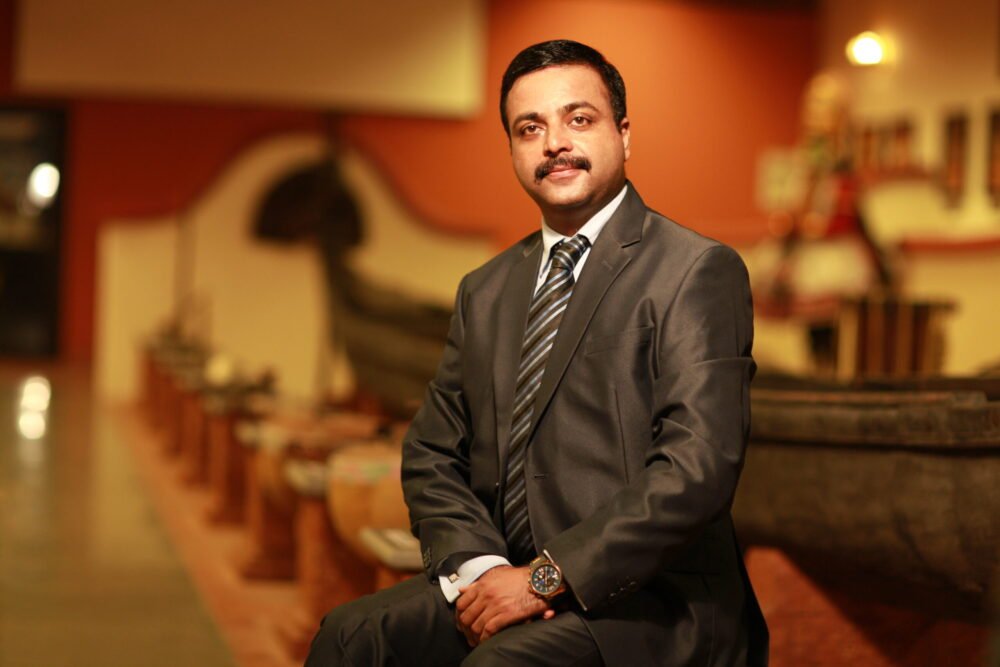
In Conversation with Dr. RK Thomas, TechnoPilot
Y e ar s o f wor k i n g in t h e i ndus t r y , yo ur c o n tr ibu t i o n r efl ec ts v e r s a ti l i t y an d volub i l i t y . Wh a t ha s inf l ue n c e d yo ur d e c i si o n m ak i n g pr o ce s s a t v a r i ou s s t ag es?
In making decisions, one tends to be influenced by external forces, as well as internal forces. At times, one of these influences may be stronger than the other, but understanding how each works to impact the decision making will help us to build campaigns that ultimately help generate sales.
Internal Influences can include cognitive bias, which is an error in decision making due to a combination of factors including the Halo effect & functional fixedness, where one tends to see an object only for its intended use. Can also include Learning –Memory as well as Emotion vs Logic. The external influences will include social, cultural & environmental issues.
Along my entrepreneurial journey have used the best of all such Internal & External stimuli to make the best and most appropriate decisions for the Company growth.
An acc o m p l is h m e n t t h a t yo u c on sider t o b e t h e m o s t si g nifi c a n t in yo ur c ar e er?
A lot more new technologies will be coming out of the testing phase of the TechnoPilot® Labs and we would be making hardware as well as embedded software inclusive of quantum components to run them. Many of our products will have found the way into people's homes more as a basic necessity than as a luxury.
Presently we are working on frontier technology of the future in the field of quantum physics, a few projects of which are already implemented and in place. These have been hugely successful and looking to disruptively changing the phase of society to that of success, well being and positive transformation.
We are an organisation working hard with the technologies of the future, some of which are not even being researched in any university till date, and using them to herald a new future for societal advancement, improved living and social conditions. More than profit making, we would like to be known as a company that caused disruptive and cataclysmic changes in the way we now live, think and do business.
Our milestones are dovetailed as a close fabric with our mission and vision. We have projects being started in major cities in India and a few in the Gulf region and USA.
We see opportunities in both the consumer and enterprise segment. We are focusing on strengthening our channel ecosystem and increasing our presence in India across tier 2 and tier 3 cities. By 2021 we would like to be present in all channels of distribution in order to reach out to potential customers and provide flexibility in licensing by partnering with Managed Service Providers.
We at TechnoPilot® predict that in the next five years there will be no more operating systems to compromise. Operating systems would have gone away and every laptop on the market would be running an emulator that functions as a start-up program on embedded firmware. Nothing can ever be infected anymore because a few key vendors would have got together to actually use the trusted modules inside technology. There would also be no more embedded passwords in IoT devices. Following a wide-spread, multi-day Internet outage as the result of multiple botnet attacks—all originating from IoT devices—the IEEE will have developed some new standards for communications and encryption on these IoT devices, and they will have dynamically generated passwords that require physical access. Every vendor would have removed default passwords and people would be used to physically touching most devices to display the password. Also decrypted Internet traffic will make antivirus software irrelevant. Communications providers would gain permission to begin decrypting traffic for the sole purpose of blocking attacks that do not match industry standards. This effectively will knock all non-IEEE standard devices off of the Internet and reduce the total consumption of bandwidth by over 90 percent on the Internet. This move will single-handedly makes anti-virus software irrelevant, as viruses can no longer even traverse the Internet without being blocked. The biometrics industry will finish development of products requiring two or more factors, including body heat and electrical impulses of skin. Also embedded technology into the human body would automate multi-factor authentication. Speaking of two-factor, we would have started to see users embed technology into their body as part of their second factor of authentication. This chip will only work when a certain heart rate, GPS location, and temperature are detected, but contains ones entire life history and will be used for medical purposes, authentication, and other forms of things that require one to be physically present. This device will be powered by ones own body. We also see that Hacking has gone pro. When I first started in this business, almost all threats were malware programs (viruses, worms, and Trojans) written by adolescent male pranksters. Although some malware programs did real harm, such as formatting disks or erasing data files, most simply annoyed people. We also had some professional and even state-sponsored hackers, but they weren't the norm. We see that almost all malware is created to steal money or corporate secrets. The script kiddies are almost gone, pushed out by the professional hacker gangs that make millions of dollars each day victimizing home users and corporations with almost no threat of being caught or prosecuted. Malware has gone from innocuous, funny viruses and worms to identity-stealing programs and ransomware. Anyone with a credit card is accustomed to having their financial identity compromised. When 100 million records are compromised, no one bats an eye anymore. Advanced persistent threats (APTs), officially or unofficially working on the behalf of a foreign government, are the new normal. They will steal private documents and emails, along with patents and contracts, as easily as child would pluck flowers in a vast field. Countries will routinely use their offensive cyber security capabilities to read the email of another country's leader -- or to destroy physical assets (such as nuclear centrifuges). Which country has the best hackers will determine the victors in the new cold war. We see that everyone has been compromised. Every company worth hacking is hacked or could easily be hacked. This has created a new defensive strategic paradigm where we acknowledge that there's no way we can eliminate persistent threats. We see improved breach detection tools. Once antivirus scanners were our main tool for breach detection. Now, an entire new set of companies and products would have been developed to detect when somebody's doing something malicious, even if that something malicious is being done by a "legitimate" user. Event monitoring systems would be improving. Many companies will be storing and analyzing billions of events a day, using huge disk storage arrays that a short time ago would have stored the world's entire collection of digital content. Intrusion detection will have moved beyond detecting simple malicious activity to detecting anomalous events that are out of character for a company and its employees. Connections to known, questionable networks are tracked and reported like the antivirus detections of yesteryear. Data leak protection (DLP) will have become big business. A decade ago, companies became practiced at shutting down their email servers and networks when the latest file attachment worm proliferated on the network. Today's defenders are creating hardened administrative computers and isolated management environments that can be used to manage their networks when a breach is detected. We see that Multifactor authentication has been proliferated. When I first started in computer security, only the government or top secret research facilities forced employees to use smart cards or other multi factor authentication tools. Now I see this at nearly every company I visit. Plus, most companies have great physical security, starting at the visitor's desk and parking lot -- and computer rooms are behind locked doors with the servers in locked cages. Everyone still has lots of passwords, but most businesses and the most popular social media sites now offer two-factor authentication. Mobile phones and popular operating systems come with biometric identification by default. Eventually, passwords alone will stop being used altogether, receding into history like paper checks or credit cards without the picture and a chip. I don't think multifactor authentication will solve all our problems, but it makes it harder for cyber thieves to steal and use ones identity. We can look for phishing emails and websites to disappear completely. Encryption will be the new default. Default encryption is on the rise despite nearly all governments protesting it. Today, most popular operating systems, computers, and mobile devices come with built-in, default-enabled disk encryption. More and more websites are using SSL (really TLS) encryption by default. Default encryption will mean that when a computing device is stolen, no longer will it turn into a data compromise that must be reported to the authorities (and the media).
Will it be a better world? Unfortunately, all these defense improvements would not have translated into a safer computing environment. There are far more malicious attacks today than there were 10 years ago. "Improvements" in cyber crime have so far completely overwhelmed the advances in cyber security defense. But I thoroughly believe that the defenses will catch up and eventually make the Internet a much safer place. It's the natural progression of every civilized society, with the same bumps along the way. For a while things get worse, but society responds, and the world advances for the better.